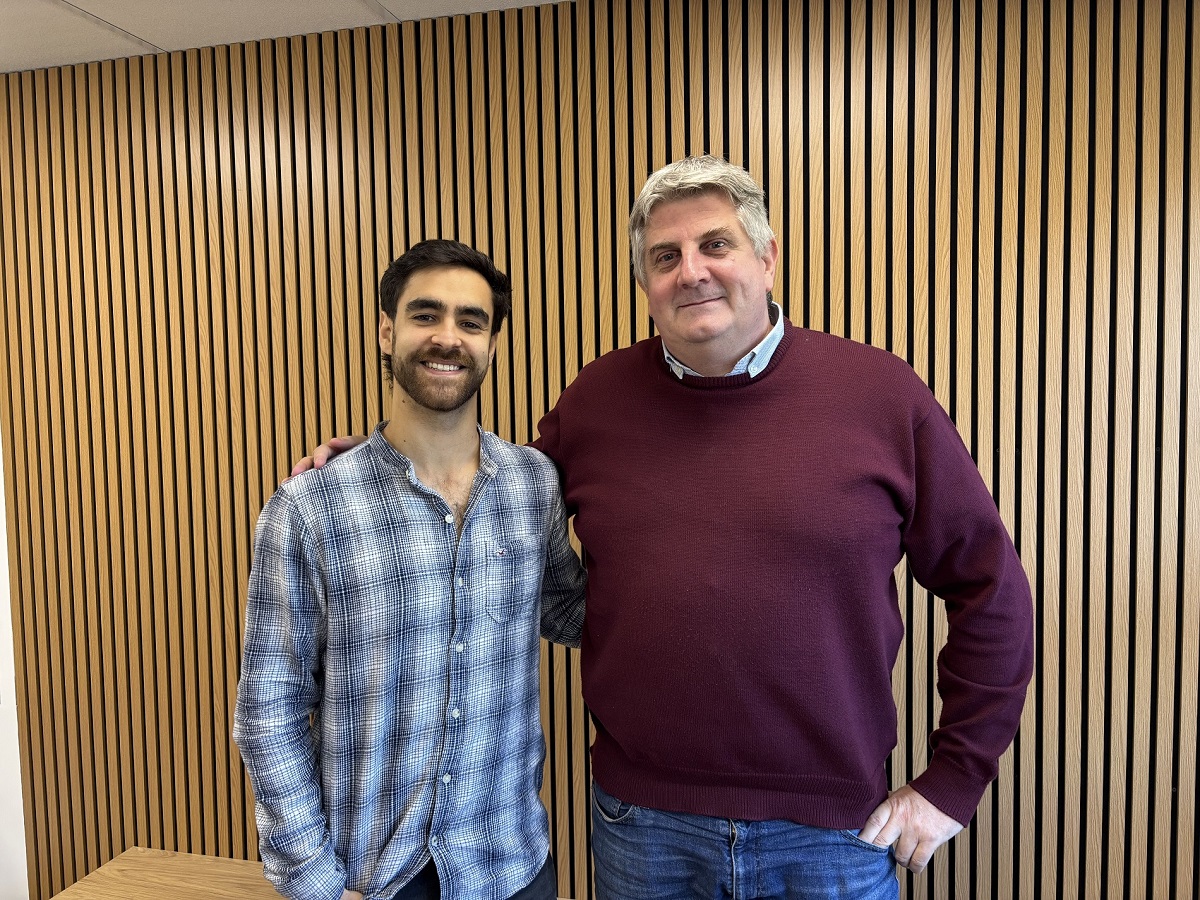
GeneGebra joined LAB+ with a clear goal: to transform the way genomic information is stored and processed for disease diagnosis. Its approach, based on mathematical concepts, promises to reduce storage costs by up to tenfold while significantly shortening processing times.
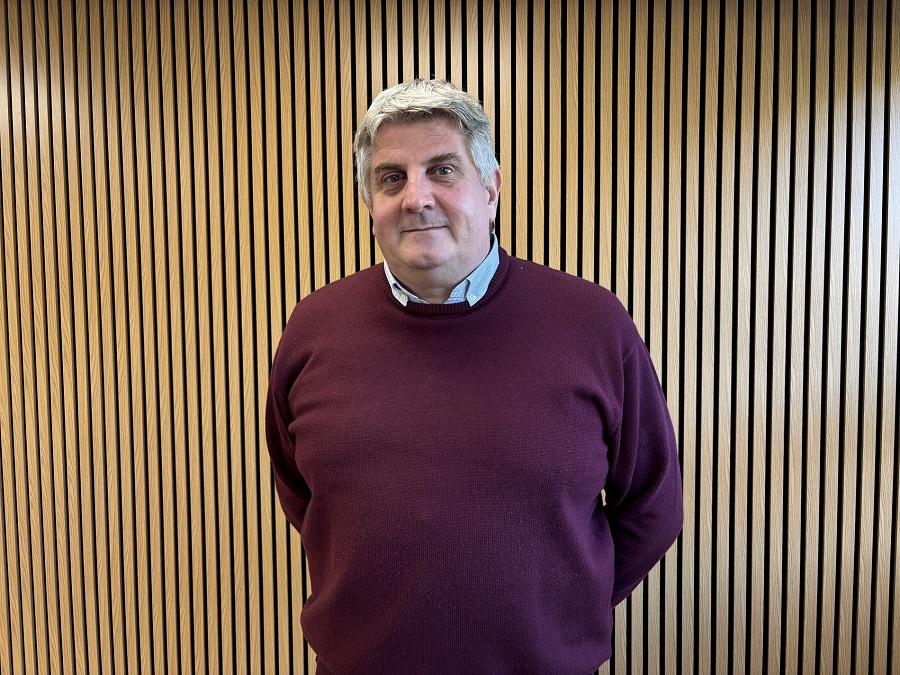
GeneGebra was founded by Xavier Berthet, Laimi S. N. Ashipala, and Amadou Alpha Sall. Berthet is a biotechnology engineer with a PhD in microbiology. His international career in the biopharmaceutical industry has taken him across Europe, Asia, and the Americas, and most recently he served as Chief Scientific Officer and Head of R&D at Institut Pasteur de Dakar.
In this interview, he explains how GeneGebra works, outlines its business model, and shares the company’s plans for the coming year.
What does GeneGebra do?
Through the language of mathematics, we aim to democratize computational biology and simplify the way genomic information is represented, stored, and analyzed.
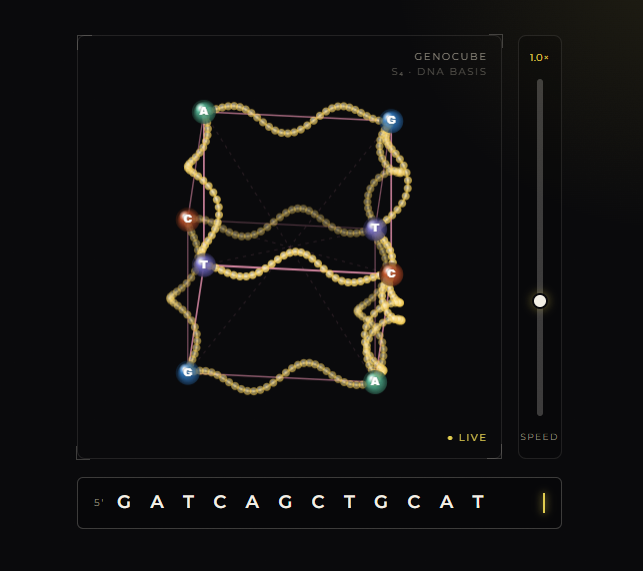
Human DNA is like a recipe book written using an alphabet of four letters: A, T, C, and G. Storing and processing that information requires enormous amounts of digital space and computing power. We are changing that paradigm. Instead of representing DNA as text, we represent it as a mathematical object—a matrix of numbers. This shift means that a person’s genome can be handled more efficiently, analyzed faster, and processed at a lower cost.
How does your method work?
In previous research, we discovered mathematical structures known as Galois groups hidden within the DNA message. Until now, we had been working only with the genetic code, but we found another layer beneath DNA: genomic algebra. This allows us to transform biological text into mathematics.
How does that happen? Galois groups contain symmetries, and those symmetries reduce the amount of information needed to represent an object. For example, if a person is symmetrical, one half can be used to reconstruct the other. The same applies to a pizza: with a single slice, you can reconstruct the entire pizza. In other words, only a fraction of the information is needed to encode the whole.
We discovered a similar mechanism within the genome. Based on that insight, we developed software that compresses and analyzes genomes using mathematics rather than text.
Why is genomic information important?
Researchers use genomic information to better understand living organisms. It is also essential for detecting infectious diseases, chronic conditions such as cancer, and genetic predispositions.
There is also metagenomics, which enables the sequencing of entire ecosystems. A single drop of river water contains DNA from viruses, bacteria, parasites, and many other organisms. Bioinformatics makes it possible to identify which organisms are present and in what proportions. This is valuable for environmental monitoring, epidemiological surveillance, and the early detection of pathogens.
Imagine DNA sensors in schools, stadiums, trains, or airports detecting, in real time, the viruses and bacteria circulating through those environments.
Genomic information is also critical for chronic infectious diseases such as HIV and tuberculosis, where pathogens evolve over time and treatments must be adapted to resistance mutations.
GeneGebra’s storage and processing method can be applied to all these areas. Looking ahead, we also plan to extend the technology to the storage of chemical structures, proteins, images, and other types of data.
What is your business model?
Our first product, the disruptive Gebra™ storage format, will be sold to organizations that manage large volumes of genomic information. If we save a client 75% in storage and energy costs, we charge 25% of those savings. In other words, our pricing is directly tied to the value we create.
For example, storing an exabyte of data—roughly equivalent to twenty times all the books ever written—costs several million dollars per year. With our format, the data footprint can be reduced by up to ten times.
Our potential clients include multinational organizations such as the National Institutes of Health (NIH), the European Bioinformatics Institute, and the European Molecular Biology Laboratory, all of which provide large-scale genomic datasets to the scientific community. We are already in discussions with the NIH and expect to engage with the European Bioinformatics Institute soon.
For researchers and academic institutions, we will offer open licenses at a symbolic cost—for example, around one thousand dollars per institute, allowing all researchers within that institution to use the software.
What stage of development are you at?
In September, we will launch our flagship product: the Gebra storage format for genomic data storage and processing.
Our second product focuses on user experience. Today, nearly all genetic sequences are stored in a text-based format called FASTA, which researchers can read directly. Gebra stores data as numbers, so our next solution will provide seamless translation between Gebra and text-based formats without increasing storage requirements or adding processing time. Researchers will be able to store information in Gebra and convert it to FASTA only when human readability is needed.
At the same time, Santiago Robaina, an engineer specializing in machine learning and artificial intelligence who recently joined the startup, is developing an AI-powered interface. This will allow users with limited bioinformatics expertise to interact with an AI agent that orchestrates the underlying mathematical processes and delivers the desired results. We plan to launch this second product during the first quarter of 2027.
So you launch the core technology first, and then the tool that makes it easier to use?
Exactly. Since everyone already works with FASTA, our technology is designed to operate behind the scenes while keeping FASTA as the visible interface. Users will not notice any difference.
A scientist who wants to sequence a patient’s genome and save time and storage space will be able to use Gebra without changing their existing workflow.
How much time can be saved using Gebra?
We have not yet completed all the dedicated benchmarking studies, but we are observing performance improvements of more than 100-fold. That includes the entire process, from loading the data to obtaining the final result.
With FASTA, analysis times vary depending on the project and researcher, ranging from a couple of hours to a full day. In addition, FASTA-based workflows often require high-performance computing infrastructure. With our software, the same analyses can be performed on a standard computer.
How did your experience in Dakar influence the creation of GeneGebra?
For me, building companies is deeply connected to fighting poverty, creating high-value jobs, and contributing to more peaceful, fair, and stable societies.
If we do not create employment opportunities, improve healthcare, and provide future prospects—especially in regions with young and rapidly growing populations such as Africa—the world becomes less stable. Affordable, high-quality healthcare is a fundamental part of that equation.
Our goal is for access to Gebra to be extremely inexpensive—or even free—for African researchers, with costs covered by major international organizations.
You arrived in Uruguay four months ago. How do you see the scientific startup ecosystem here?
I found a very welcoming country. We were received warmly and were able to start under excellent conditions, with access to laboratory facilities at the Institut Pasteur de Montevideo, talented people, and strong institutional support.
Uruguay is not yet among the world’s major startup hubs, but that also comes with advantages. I would rather be in a calm environment where it is possible to build something meaningful with focus and efficiency than in a hypercompetitive ecosystem where people spend years chasing investment because of intense competition.
For me, time to market is critical. If you can raise one million dollars here and focus on building a product, I would rather do that than spend years competing in Silicon Valley. It is not about status—it is about efficiency.
In addition, it is very important for us to engage with researchers and institutions in Uruguay, both to identify use cases and to build partnerships, develop projects, and create value together.